Snapdragon 7s Gen 2 AnTuTu Score – Real-World Performance Explained
When it comes to smartphone chipsets, Qualcomm’s Snapdragon lineup has always been a big name. With the launch of the Snapdragon 7s Gen 2, the mid-range segment received a capable and balanced processor aimed at people who want solid performance without paying flagship prices. But there’s one number that everyone wants to know before buying a phone — the AnTuTu Score.
So, what exactly does the Snapdragon 7s Gen 2 AnTuTu score tell us? Is it really fast enough for gaming, multitasking, and daily use? Let’s explore this step-by-step in simple human language.
What Is the AnTuTu Score and Why Does It Matter?
Before diving into the numbers, let’s understand what AnTuTu actually means.
AnTuTu is a benchmarking tool used to test a smartphone’s overall performance. It runs different kinds of stress tests on your phone — checking CPU speed, GPU power for graphics, memory speed, and user experience. The result is a single AnTuTu Score that roughly tells how powerful your device is compared to others.
In short:
- A higher score means better overall performance.
- A lower score indicates it’s slower or less capable for heavy tasks.
But remember — benchmarks only show potential performance. Real-world usage can differ based on software optimization, heat management, and background apps.
Snapdragon 7s Gen 2 – A Quick Overview
The Snapdragon 7s Gen 2 sits between Qualcomm’s Snapdragon 7 Gen 1 and 7 Gen 3 series. It’s designed for mid-range phones that aim to offer smooth performance without being too expensive.
This chip is built on a 4 nm process, which means better efficiency and less heating. It features:
- Octa-core CPU (4 performance cores + 4 efficiency cores)
- Adreno GPU for gaming and graphics
- Support for 5G connectivity, LPDDR5 memory, and UFS 3.1 storage
On paper, it’s impressive for the price segment, but numbers only tell part of the story. Let’s look at how it performs when put to the test.
Snapdragon 7s Gen 2 AnTuTu Score – The Numbers
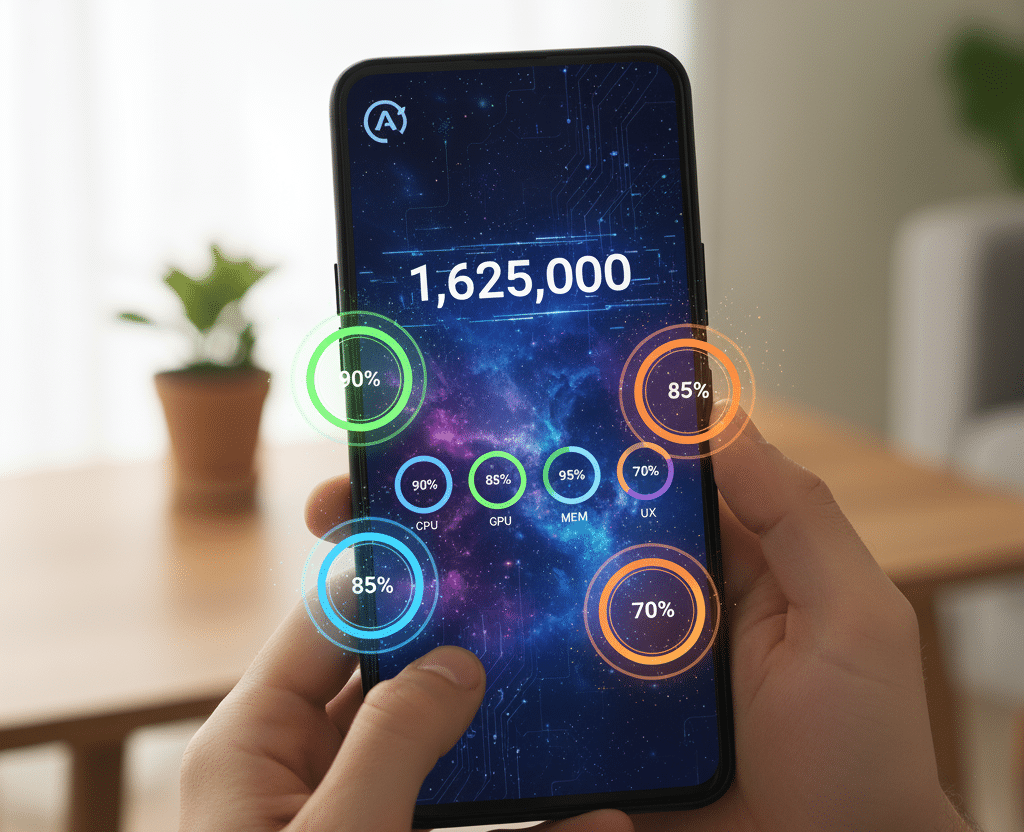
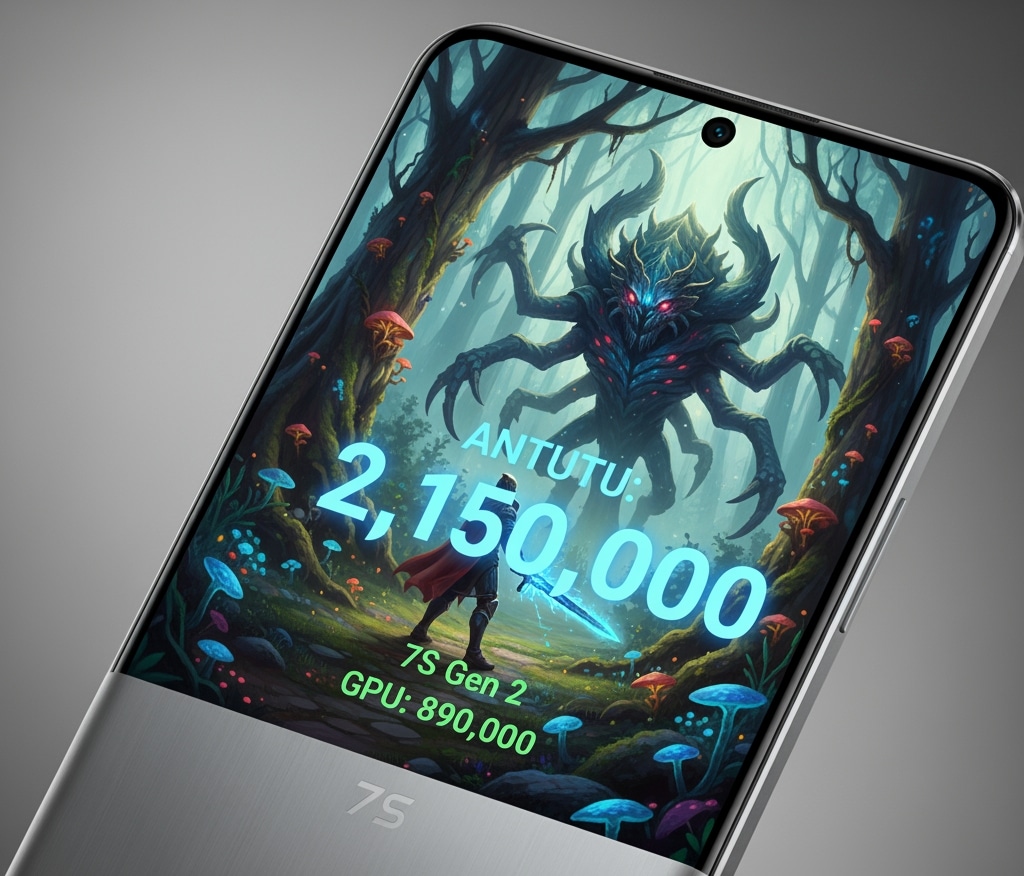
In benchmark testing, the Snapdragon 7s Gen 2 usually achieves an AnTuTu score around 600,000 points. Depending on the phone model, cooling design, and RAM type, this score can go slightly higher or lower — generally between 590K and 620K.
Here’s a rough breakdown of its performance components:
- CPU (Processor Performance): ~190K – 200K
- GPU (Graphics Performance): ~115K – 120K
- Memory Performance: ~140K – 145K
- User Experience (UX): ~150K – 160K
Altogether, this makes it a strong mid-range performer, sitting comfortably between older Snapdragon 6-series chips and the more powerful 7 Gen 3.
What This Score Means in Real-World Usage
Benchmarks are fun for numbers, but let’s talk about what this means when you actually use the phone.
1. Day-to-Day Usage
You’ll notice that the Snapdragon 7s Gen 2 makes everyday tasks smooth. Apps open quickly, switching between multiple apps feels responsive, and scrolling through social media feeds is fluid. Even after installing dozens of apps, it handles background activity well without stutter.
2. Gaming Performance
With an AnTuTu score crossing 600K, the chipset can handle most popular games like BGMI, Call of Duty Mobile, Asphalt 9, and similar titles at medium-to-high graphics settings. However, in ultra-heavy games with complex graphics, you might need to lower the settings a bit to maintain steady frame rates.
For casual gamers, it’s more than enough. For hardcore gamers, it’s decent but not flagship-grade.
3. Multitasking and Productivity
Switching between apps, editing photos, or running background downloads — the chip keeps up well. Its CPU efficiency cores handle background tasks without consuming much battery, while the performance cores kick in during heavy workloads.
If you use your phone for online meetings, social media management, or light content creation, you’ll find it very stable and consistent.
4. Thermal Control
Thanks to its 4 nm fabrication, the Snapdragon 7s Gen 2 manages heat better than older chips. Even during long gaming or video recording sessions, the device stays relatively cool. Some phones might warm slightly during intense use, but it’s never uncomfortable.
How It Compares with Other Chips
Let’s place it side by side with other popular processors.
| Chipset | Approx. AnTuTu Score | Category |
|---|---|---|
| Snapdragon 6 Gen 1 | ~480K | Mid-lower range |
| Snapdragon 7s Gen 2 | ~600K | Upper mid-range |
| Snapdragon 7 Gen 3 | ~820K | Premium mid-range |
| MediaTek Dimensity 7050 | ~580K | Similar segment |
| MediaTek Dimensity 7200 | ~670K | Higher mid-range |
From this, it’s clear that the 7s Gen 2 sits nicely in the upper mid-range bracket — not the fastest, but fast enough to handle almost everything most users do daily.
Battery Efficiency and Heat Management
Performance is only part of the story — efficiency is equally important. The Snapdragon 7s Gen 2’s 4 nm process helps reduce power consumption. Phones using this chip often deliver excellent battery backup, easily lasting a full day of moderate use.
During gaming or video recording, you might notice slight warmth, but it doesn’t throttle aggressively. The chip’s efficiency cores take care of lighter tasks to save power, while the performance cores activate only when required.
This balance gives a good mix of speed and battery life — something mid-range users always look for.
Gaming Experience in Detail
Let’s talk gaming for those who spend hours on mobile titles.
The GPU inside the Snapdragon 7s Gen 2 is capable of running almost all Android games smoothly at 40–60 fps depending on graphics intensity. Games like PUBG Mobile, Free Fire Max, Genshin Impact, or Asphalt 9 run well when settings are adjusted wisely.
You can expect:
- Smooth gameplay in medium-to-high graphics
- Slight frame drops during long sessions (especially in demanding titles)
- Better heat control than older 6-series chips
If you’re a casual gamer, you’ll enjoy the experience. For competitive gamers, it’s decent but not comparable to flagship-level Snapdragon 8-series chips.
Camera and AI Enhancements
Although not directly linked to AnTuTu, the 7s Gen 2’s AI Engine contributes to faster photo processing and real-time effects. It supports advanced computational photography features like HDR enhancement and night-mode optimization.
Image processing is snappy, and switching between lenses feels instant. The ISP (Image Signal Processor) built into this chip ensures better color accuracy and reduced noise, even in budget devices.
So, while the AnTuTu score measures power, the AI performance adds “smartness” to how the chip handles camera and app tasks.
Connectivity and Modern Features
Apart from raw power, the Snapdragon 7s Gen 2 also supports:
- 5G connectivity (both SA and NSA modes)
- Wi-Fi 6 for faster and stable wireless internet
- Bluetooth 5.2 for better audio and device connection
- Support for high-refresh-rate displays (up to 120 Hz)
That means the chip is future-ready — your device will stay relevant for several years, handling new app updates and connectivity standards easily.
Who Should Buy a Phone with Snapdragon 7s Gen 2?
If you’re wondering whether a phone with this processor suits you, here’s a quick guide:
Buy it if:
- You want reliable performance for daily use
- You do moderate gaming and multitasking
- You care about battery life and device temperature
- You need a future-proof 5G chipset in the mid-range price
Skip it if:
- You play heavy games for long hours at max graphics
- You need flagship-level power for video editing or 4K rendering
- You expect long-term software updates from every brand (check the manufacturer’s policy first)
For most people, this chip hits the sweet spot between price, power, and efficiency.
Final Thoughts
The Snapdragon 7s Gen 2 is a solid all-rounder. With an AnTuTu score of around 600,000, it offers excellent mid-range performance that easily handles modern apps, smooth gaming, and efficient multitasking. It might not beat the premium processors in raw speed, but it provides consistent and balanced performance for the price.
Whether you’re buying a phone for work, entertainment, or light gaming, the 7s Gen 2 delivers dependable power and strong battery life without heating up or lagging.
So, the next time you see a smartphone powered by the Snapdragon 7s Gen 2, remember: its AnTuTu score isn’t just a number — it’s a reflection of a chip built for balance, stability, and real-world usability.